
Kimi Antonelli secured victory at the US Grand Prix, bringing him to the verge of becoming Formula One's youngest-ever champion. The Mercedes driver now needs only two points in Mexico to clinch the title, despite efforts from rivals Lewis Hamilton and George Russell to delay his triumph. Charles Leclerc finished second, with Max Verstappen third.

Democratic candidate Abdul El-Sayed has claimed victory in Michigan's Senate race, making him the first Muslim elected to the United States Senate, a historic win amidst a nationwide Democratic sweep in the 2026 midterm elections.

Indian-Americans have achieved significant victories in state legislative races across the US midterm elections, with several individuals securing key positions and making history in various states like Michigan, Arizona, Illinois, and Texas, further solidifying their growing political influence.

Indian-born democratic socialist Nithya Raman has been elected Mayor of Los Angeles, becoming the first South Asian mayor of the nation's second-largest city. Her victory is part of a broader trend of Indian-American candidates winning in the US midterm elections, highlighting the growing political power of the community.

Billionaire Elon Musk reacted to the Democratic sweep in the 2026 US midterm elections with sarcastic posts on X, lamenting that his 'election-interfering space lasers didn't work' and suggesting 'data centers in space' looked appealing after Republicans suffered major setbacks despite his extensive financial support.

Pope Leo XIV has made history by becoming the first pontiff to vote in a United States election, submitting a mail-in ballot for the upcoming midterm elections. The Vatican confirmed his participation, citing his long-standing belief in civic duty and democratic processes, having voted in previous elections as a US citizen and during his residence in Peru. The US midterm elections, scheduled for Tuesday, November 3, 2026, will determine control of Congress and have significant implications for the current administration.

India's Indo-Pacific approach has traditionally emphasised strategic autonomy, ASEAN centrality, freedom of navigation, respect for international law and an inclusive regional order. Its growing defence and maritime partnerships with Australia, Japan, Indonesia, Vietnam and other Southeast Asian countries provide additional depth to this approach, point out Dr Kumar and Dr Jasmeet Kaur.

Brazil's defeated right-wing presidential candidate, Flavio Bolsonaro, has declared himself the legitimate head of state from self-imposed exile in the United States, alleging electoral fraud. His move comes days after leftist President Luiz Inacio Lula da Silva secured victory, further highlighting political instability in Brazil. Bolsonaro faces corruption inquiries at home and departed Brazil despite instructions to surrender his passports.

Indian-American Democratic lawmakers Ami Bera, Ro Khanna, Suhas Subramanyam, and Pramila Jayapal have been re-elected to the US House of Representatives, with Pia Dandiya making her debut, marking a strong showing by the community in the recent midterm elections where Democrats gained control of both the House and Senate.
The Samosa Caucus, an informal group of Indian-American lawmakers, is set to expand its presence in the US House of Representatives following the recent elections. With Democrats gaining control of both the House and Senate, re-elected members like Ami Bera, Ro Khanna, Suhas Subramanyam, and Pramila Jayapal will be joined by newcomers Pia Dandiya and Amish Shah, significantly increasing Indian-American representation on Capitol Hill.

Following the US midterm elections where Democrats gained control of both the House and Senate, former President Donald Trump has asserted his intention to use his 'Veto' power against what he calls 'insane' legislative proposals from Congress, signalling a period of divided government.

Kimi Antonelli can become Formula One's youngest world champion in Mexico City with a top-nine finish, while Sergio Perez celebrates his 300th start before home fans.

The US Senate passed a resolution directing then-President Donald Trump to withdraw American forces from the conflict with Iran. This bipartisan vote, though largely symbolic as a concurrent resolution, highlighted congressional concerns over potential escalation and a desire to limit presidential military authority without legislative approval.

Following the midterm elections, attention is already turning to the 2028 US presidential polls. Indian American Congressman Ro Khanna is seeing early support for a potential bid, with allies launching a group to build momentum. Meanwhile, Secretary of State Marco Rubio has dismissed reports of his own presidential aspirations, affirming his commitment to the current administration.

Americans are voting in crucial midterm elections, widely seen as a referendum on Donald Trump's presidency. The elections will determine control of the House and Senate, with Democrats hoping to gain power. Key races include governorships and numerous Indian-American candidates. Trump's last-minute policy announcements and campaigning efforts are highlighted, as analysts predict a potential shift in power that could limit his agenda.

Several Indian-Americans have achieved significant victories in the US midterm elections, with five securing seats in the House of Representatives and Maryland Lieutenant Governor Aruna Miller winning re-election. The article profiles these successful candidates, highlighting their backgrounds and contributions to American politics.

Democrats are projected to reclaim control of the House of Representatives in the 2026 midterm elections, paving the way for House Minority Leader Hakeem Jeffries to potentially become the first African American Speaker of the House, marking a historic political transformation in the United States.

Donald Trump has announced that Stephen Miller will take over as White House Chief of Staff from November 9, 2026, replacing Susie Wiles, who will move to Trump's political operation. Trump praised both Miller and Wiles, indicating a desire for strategic changes within his administration.

Former US Secretary of State Antony Blinken stated that the US must respect India's right to self-defence and maintain a zero-tolerance policy towards terrorism, highlighting the "fundamentally different" nature of Washington's relationships with New Delhi and Islamabad. He described US-India ties as global and strategic, while US-Pakistan relations are regional. Blinken also touched upon cooperation in emerging technologies, India's ties with Russia, rapid global changes, US domestic politics, and the West Asia conflict, advocating for a two-state solution.

US President Donald Trump has defended a controversial diesel deal with Russia, stating it aims to stabilise the global market despite bipartisan criticism from US lawmakers. The deal, which eases sanctions on Russian diesel shipments until April 2027, has been criticised as a "gift to our adversary" that finances Russia's war efforts and offers little relief to Americans.

Iranian supreme leader Ayatollah Mojtaba Hosseini Khamenei has declared that the results of the US midterm elections and shifts between American political parties will not alter Iran's defensive strategy or soften Washington's long-standing hostility toward the Iranian nation.

US Senator Lindsey Graham passed away of a cardiac arrest a few hours after these photographs were taken.

Following significant midterm election losses, US Vice President J D Vance is reportedly forming a new political alliance targeting disaffected Trump supporters for the 2028 presidential election, while President Donald Trump is considering whether to retain Pete Hegseth as Secretary of War amid scrutiny over the Iran conflict.
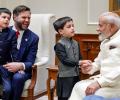
US Vice President JD Vance and Prime Minister Narendra Modi held a phone call to discuss expanding the India-US comprehensive global strategic partnership, focusing on trade, defence, energy security, emerging technologies, and critical minerals. The discussion comes amidst rising tensions in West Asia and recent regional realignments, with both leaders reaffirming their commitment to strengthening cooperation.

US President Donald Trump received a grand welcome from Chinese President Xi Jinping in Shenzhen for the APEC Economic Leaders' Meeting, culminating in an unprecedented trilateral meeting with Russian President Vladimir Putin. The leaders discussed critical global issues including the Ukraine conflict, Iran, artificial intelligence, and nuclear arms reduction, marking significant political gains for each leader on the international stage.

Indian-American physician Amish Shah has made history by becoming the first from the community to represent Arizona in the US Congress. Shah, a Democrat, defeated Republican Jay Feely in Arizona's First Congressional District, flipping a Republican-held seat. A three-term member of the Arizona House of Representatives, Shah campaigned on issues like lowering costs, expanding healthcare, and solving the water crisis, and his victory is part of a broader trend of Indian-American candidates succeeding in US elections.

US President Donald Trump, Chinese President Xi Jinping, and Russian President Vladimir Putin held an unprecedented trilateral meeting at the APEC Economic Leaders' Meeting in Shenzhen, discussing global conflicts, nuclear arms reduction, and artificial intelligence.

Vance was sceptical about the war against Iran and was the only figure in Trump's circle who refused to endorse Benjamin Netanyahu's bid for re-election as prime minister, points out Ambassador M K Bhadrakumar.

US President Donald Trump stated that Iran is eager to make a deal and predicted a sharp decline in oil prices due to abundant supply, amidst a Senate resolution to limit his war powers in Iran.

'Trump has weakened, not necessarily restrained.'

President Donald Trump has announced a promise to issue a USD 5,000 dividend to every adult US citizen if Republicans secure victory in both the House and the Senate in the upcoming midterm elections, citing the nation's economic success under his administration.

The US House of Representatives has passed the Lindsey O Graham Sanctioning Russia and Iran Act of 2026, authorising President Trump to impose sanctions on Russia's energy sector and tariffs on countries like India and China that purchase Russian oil and gas. The legislation aims to curb Russia's ability to evade existing sanctions and reduce global dependence on its energy exports, despite some Democratic opposition to increased tariff authority for the President.

Top US lawmakers, leaders, and civil society members have strongly condemned an alleged plot to attack a Hindu temple in Illinois. Alexandros Paporakis, 19, was arrested for attempting a mass shooting at the Aurora temple, which failed when his rifle jammed. Indian-American Congressmen and other officials have called for efforts to combat rising anti-Indian and anti-Hindu prejudice in America, highlighting the need to protect minority houses of worship.
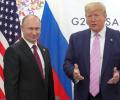
Former President Donald Trump's recent deal with Russia to supply diesel to the US and global markets has ignited a political firestorm, drawing sharp criticism from Ukraine's President Volodymyr Zelenskyy, Democratic leaders, and a segment of Republicans, despite the US Treasury lifting sanctions on Russian diesel supplies.

US lawmakers are racing to amend the Russia sanctions bill before recess. One amendment specifically names India, China, and other countries as potential targets for 100% tariffs due to their oil trade with Russia. Another significant amendment proposes to scrap the tariff section entirely, while others address presidential waiver powers and aid to Ukraine.

US President Donald Trump is expected to sign the Lindsey O. Graham Sanctioning Russia and Iran Act of 2026 later on Friday (local time). A White House official confirmed the development to ANI without revealing further details.

Indian-American Congressman Raja Krishnamoorthi voted in favour of a Russia sanctions act in the US House, diverging from his Democratic party and other Indian-American lawmakers. The bill, which passed, imposes tariffs on Russian oil and gas buyers, potentially impacting India and China, and exempts US uranium purchases from Russia.

The US senate last week passed a bill that would allow Washington to impose tariffs on major buyers of Russian energy.

India has stated its commitment to protecting its economic interests and ensuring energy security after the US House of Representatives passed a bill allowing the US President to impose tariffs of up to 100 per cent on countries, including India and China, for purchasing Russian crude oil. The Ministry of External Affairs affirmed India's resolve to maintain diversified energy sourcing and has articulated its concerns to US interlocutors regarding the bill's potential implications.

United States Senator Lindsey Graham on Sunday claimed that Indian Ambassador to the US Vinay Mohan Kwatra spoke to him last month about India buying less Russian oil and asked him to tell President Donald Trump to relieve the 25 per cent tariff.
